Category Archives: General

Gardening Prep

  1. Select garden location.
  2. Prepare location [clean, weed, amend]
  3. Get seeds or seedlings that you want to plant. [tomatoes, corn, broccoli, etc.]

Grandpas garden was a mess!!!!!! So if it wasn’t for me, it wouldn’t have gotten done. Lucky for him he had his handy-dandy grandchild… me! we had to rake, shovel, weed, and fix a water pipe that had broken during the winter freeze. I was so dirty, my dog started to help!!!!!!!!!!

Gardening Spring of 2011

Is there anybody out there?!
Well if you haven’t guessed yet, the weather is changing daily. For us in Tucson, if we don’t hurry and take advantage… we will find ourselves behind in our planting.

As I write this, I am feeling sad because I’ve made the decision to not plant this season. I want to but with all that is going on in my life and the travel that I must do this year precludes me from allocating the time required to ensure a positive outcome. But who knows, maybe I can get something in the ground that will take little time and effort. If you have a similar dilemma, let me know what your plans are and if you are going to plant something that would be considered low maintenance… Let me know what it is!

Spring planting comes early here in the Old Pueblo. By now we should have our green leaf veggies in the ground. Lettuce, cabbage, greens, squash, cucumbers etc., will do well in the coolness and will survive the slight freeze threat that typically is past us by the mid to late March. Other plants that we should be prep-ing are tomatoes, peppers, artichokes, okra (even from seed). If you don’t have them in the ground yet, it is not too late!

Mend your soil with amendment of you choosing, I have had success with Happy Frog. Mesquite Garden Growers, located on Grant Rd, East of Kolb, also has calcium and their own brand of multi purpose vegetable fertilizer that I’ve used.

Remember to rotate your planting to avoid depleting the soil and to reduce the success of critters that would cause damage. If you are unable to rotate, it is a good idea to transfer soil and amend it.

For other suitable plants, please check with your local nursery and I encourage you to include any other spring plant recommendations in the comments of this post.
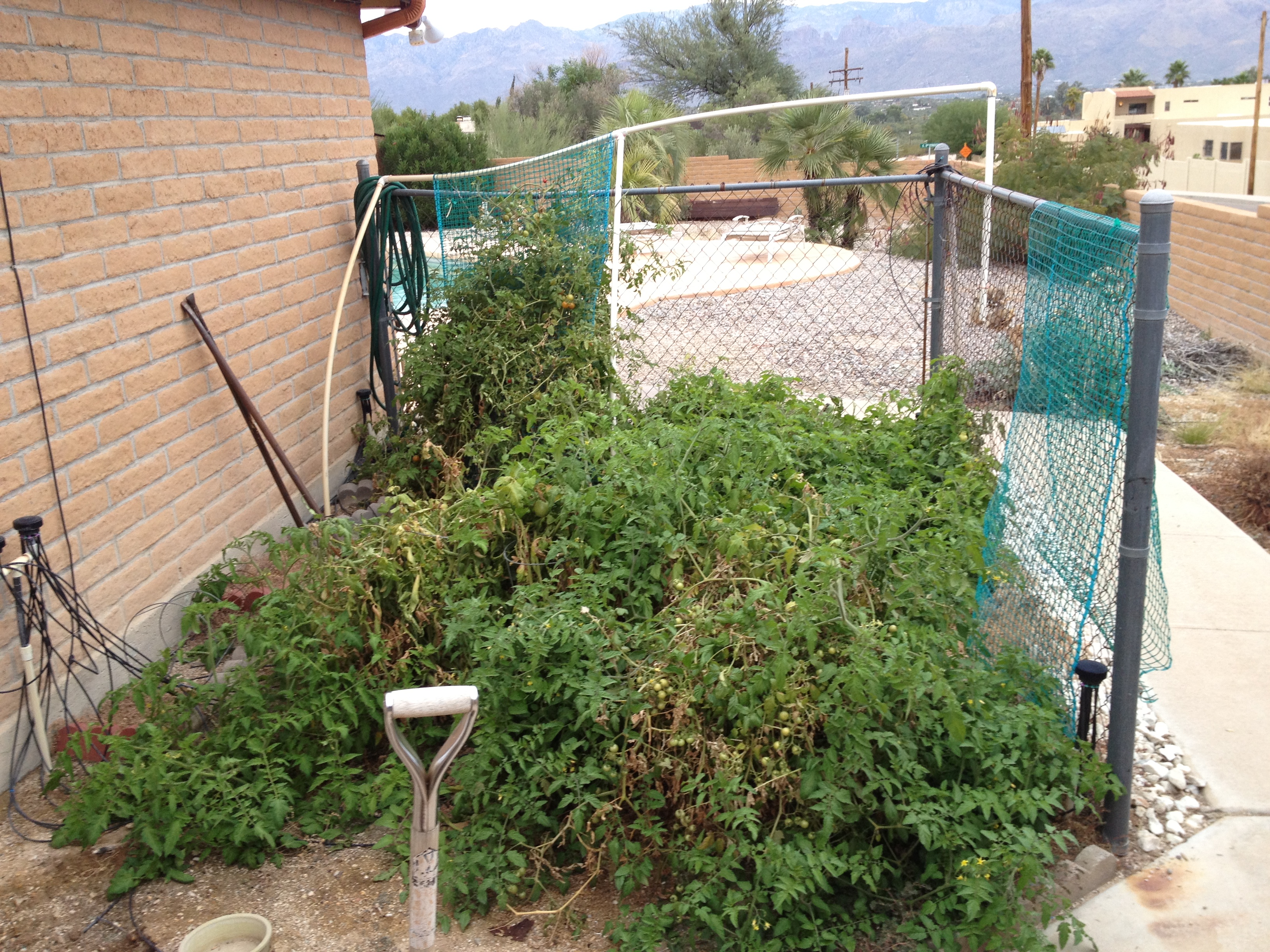
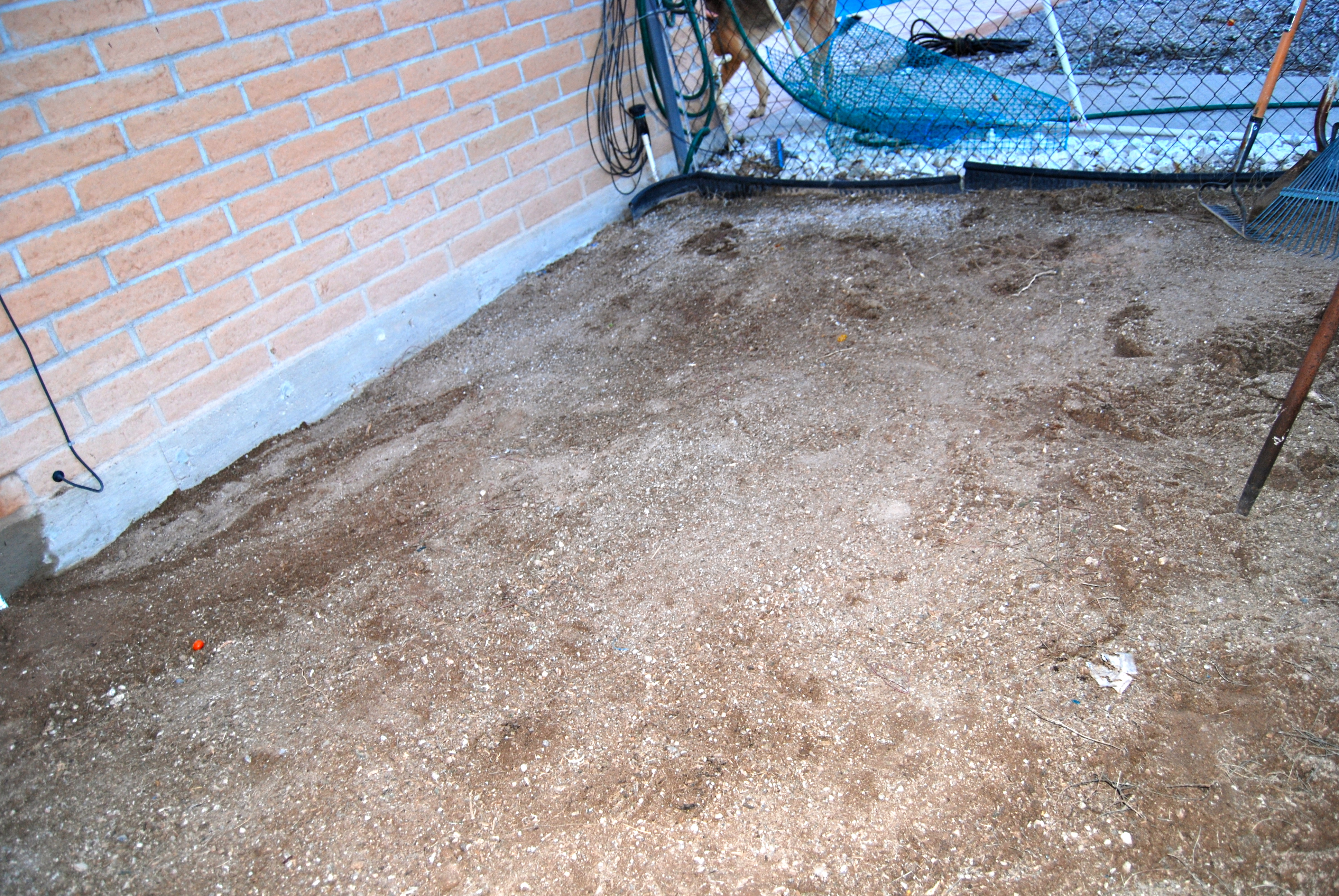
Tomato Farm Update

All the tomatoes are full grown and one has actually turned to ash from being in the full sun. Of the 6 remaining, two I have just given over to the birds, tired of the fight. The other four are producing, one really well, although splitting and cracking is an issue. Must say, though, that it usually is an issue just before the Monsoons arrive. The smallest, a grape (or is it globe), is really putting out. I’m giving most of these away….trading them for goat poop to go in my compost pile. They aren’t my favorite and I have lots to contend with.

The watermelon has given me 5 melons so far, good ones, but a bit tattered my the rabbits and the dratted birds….is there nothing that they won’t eat?

The artichoke is struggling with it’s last blooms. The chokes I allowed to bloom were beautiful purple and big. Good for bees, and no rabbit seems interested in it now that it’s burnt up and woody. I’m replacing it with something winter growing….what? It’s a good emitter, even if it is in an unprotected location.

Have killed 4 rattlesnakes, was visited by one king snake and then killed same king snake at a later date when he got badly tangled in the bird netting.  Only silver lining to that was that his “smell” deters the crafty cactus wrens from stealing from that tomato plant, (how long is anybody’s guess).  So goes the fight at my Summer Tomato Farm. Can’t wait for the monsoons when everything revives and the bell peppers actually begin their best efforts.

Having any good luck on the East side. How goes the compost?

Babies

My winter tomatoes were more of a success than I ever thought. I planted my spring tomatoes and now I have babies on the Early Girl and the Romas. I sure hope the sun doesn’t burn them to a crisp before I get the best of them, too. Saw my first artichoke baby as well. A good start to spring, soon to be summer. I went and saw a local organic farm last weekend, and plan to incorporate more of their practices in my small backyard endeavor. Mostly flowers among the vegetables to draw more bees and beneficials, also used as ground cover in the place of mulch. Anxious to see how that’s gonna work for me….sure looks prettier….

Sleeping Frog Farms Goes CSA

How exciting.  A local organic farm sells shares to the public.  That’s good news for a backyard gardener like me.  I can’t grow enough in my limited space to eat the variety I’d like.  Don’t like paying exorbitant prices that many stores ask for their organics, so this is an excellent option.  Once a week I pick up a bag of produce (not of my choice, but then, I’m not that picky) and take it home to cook up.  The cost is approximately $25 per week and I signed up for 20 weeks.  They pull it, bag it, and take it to the pick up location…..where I am there waiting…..what a deal.  Nothing more than 3 hours out of the ground or off of the plant.  The only place I could do better is in my own yard.  Plus, I get to visit “the farm” anytime I like and get their advice on how to grow stuff.  I’m practically in heaven now, or the garden of eden….how cool is that?

CSA is a term meaning:  Community Supported Agriculture.  A relatively new idea to support local farms.  The farm sells shares and then gets participation from the Share Partner on the farm,  or money, (or both) to enable them to continue farming.  The community Share Partner gets a portion of the farm’s harvest, whatever it is, delivered to them each week, so the farm doesn’t have to send their produce on week long trips in huge trucks to supermarkets.  (A process that reduces the quality of the produce and severely limits the income to the farm.)  The Share Partner picks it up  himself from a pick-up location and everybody wins.  Produce is fresher and healthier, the local economy and the local farmer benefits the most, the Share Partner gets the best from the farm and helps the local community to boot.

Next, I’m gonna find me someone who raises chickens and goats.

And it Begins Again

The broccoli is all over and I have abandoned the remaining stalks to Itty, who appears to be quite happy with her little corner and is staying out of mine…..for the time being anyway. Spinach is done and the 2 remaining plants bolted already, as if to say, let’s move on already…..

I’m afraid I’m gonna be over-run by tomatoes this summer. My friend Delton had a few extra’s that he didn’t have room to plant, so I “graciously” took them off his hands. (Truth is I would have begged—I think I did, a little.) So now I have San Marzano, Celebrity, Jet Sonic, Sun King, Early Girl, Tommy Boy, Roma, and one more I cannot remember the name of. In addition to these, I’ve got some carrots, yellow and red bells, and my ole stand-by beets, and then there is the artichoke from last year. Bruce wants me to plant corn again, but I’m hesitant since it seems to be a tomato year, and where the heck do I put the corn? Corn begs for a stand (like 3×3 plants–can’t do just a single row).  I have one corner left for some sun loving wild vine-thing like watermelon.

Also I decided to use a stray emitter, who’s plant gave it up sometime in the winter. It’s also full sun. Hmm…it now looks a bit like I’m starting to landscape with vegetables. Cantalope would be a good choice for that emmiter right now. So much to do……so little time to play…..

PS. Lamont, I signed up with a CSA for a box of organic, home grown groceries weekly for the next 5 months. You familiar with CSA’s?

Spinach

Spinach is perhaps the easiest thing besides lettuce to grow. It is a cold weather crop….as it bolts in heat. Loves growing in pots, doesn’t mind cold nights and doesn’t mind being crowded. I thin it when it looks really crowded, say, once a week and clean & refrigerate the baby leaves to use in soups and salads. Very healthy and super easy. Wish I had planted a whole lot more of it. Great winter crop for Tucson.

Beans Update

Ok, admitedly, you can’t grow all things well.  It seems that everyone has a speciality.  Mine is tomatoes, or broccoli maybe, but certainly not beans.  I have been harvesting my pole & bush beans for about 3 weeks now and it looks like they are just about done.  I’ve gotten perhaps enough for a family of 6 to eat at a single meal.  And not all harvested at once.  Perhaps a handfull a day, at best.  Plus, there were wild temperature fluctuations….two nights of near freezing, and daytime record highs, that caused an uncontrollable case of powdery mildew, which ultimately is causing the premature demise of the entire bean crop.  There was the huge attraction of the mice and birds to the bean seeds, and Itty was useless as a deterrant, in fact, she enjoyed digging the seeds up herself.  Traitor.  Do I sound bitter?  It’ll take a couple of weeks for the sting of this defeat to melt into a distant memory.  Meanwhile, perhaps there are lessons to be learned here.  For one, I don’t usually have disease as a foe, so the experience of dealing with powdery mildew was a good thing to learn.  (That, spraying the beans three days in a row will knock it out before it becomes a big problem.)  And then, there is always the big one….preparing the soil. This is usually where I beat the battles before they begin.  Stronger plants, more disease resistance, and larger yields can all be traced back to good dirt.  The last thing I’m gleaning from my bean experience is the silver lining…..even if the bean crop was a failure, beans still fix nitrogen in the soil, so the planting that follows my failed crop next spring will be much better off because the beans grew there.

 
ps.  I will try beans again, but not until I’m in a happier place.